The Crouching City
DC's aesthetic rules cripple our housing supply

Meeting today at 7pm in WGR 209!
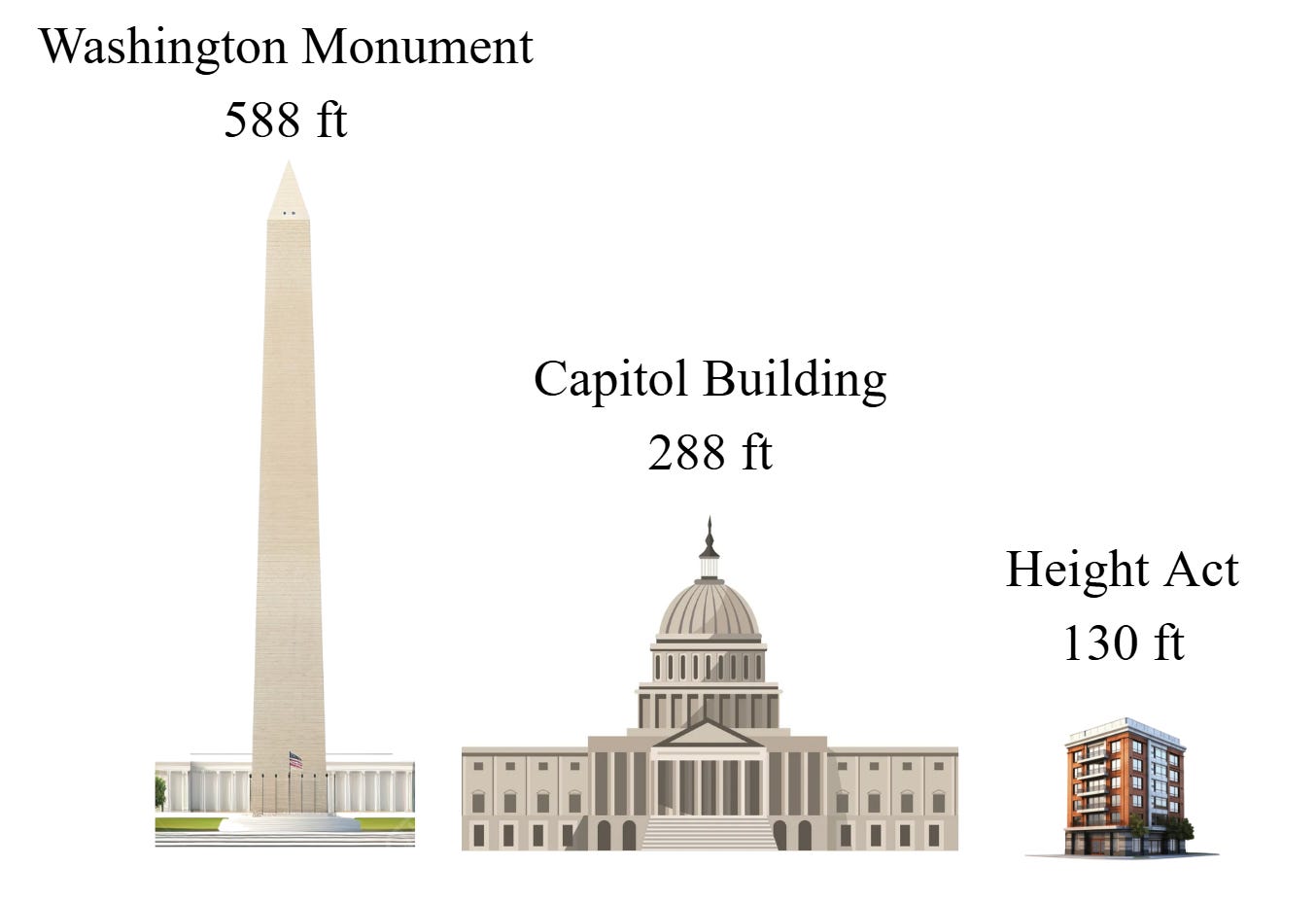
Washington, DC is the largest city in the country without a skyscraper. Most residents believe that this is because building heights are restricted to half that of the Washington Monument, or perhaps another public structure, but in fact the Washington Monument is over four times taller than the maximum allowable building height!
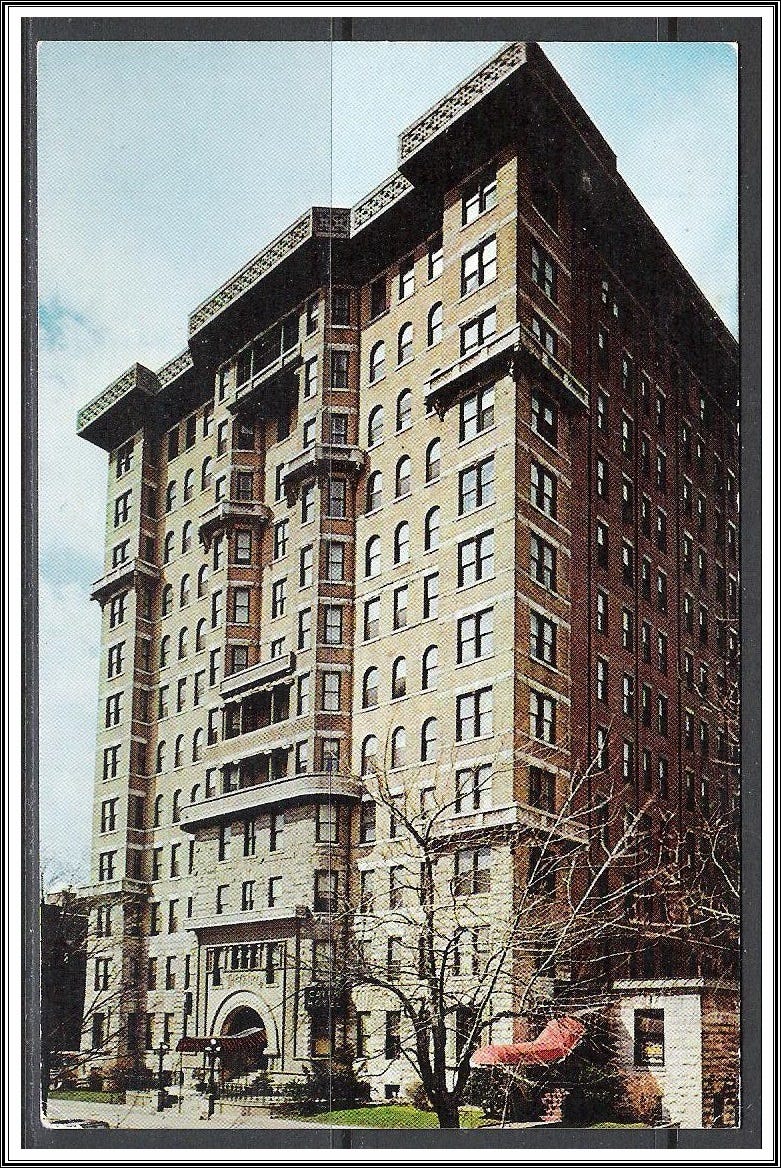
DC’s height restrictions date back, of course, to 19th-century NIMBYs. The impetus for their anger was the Cairo Hotel, constructed in 1894 at 164 feet:
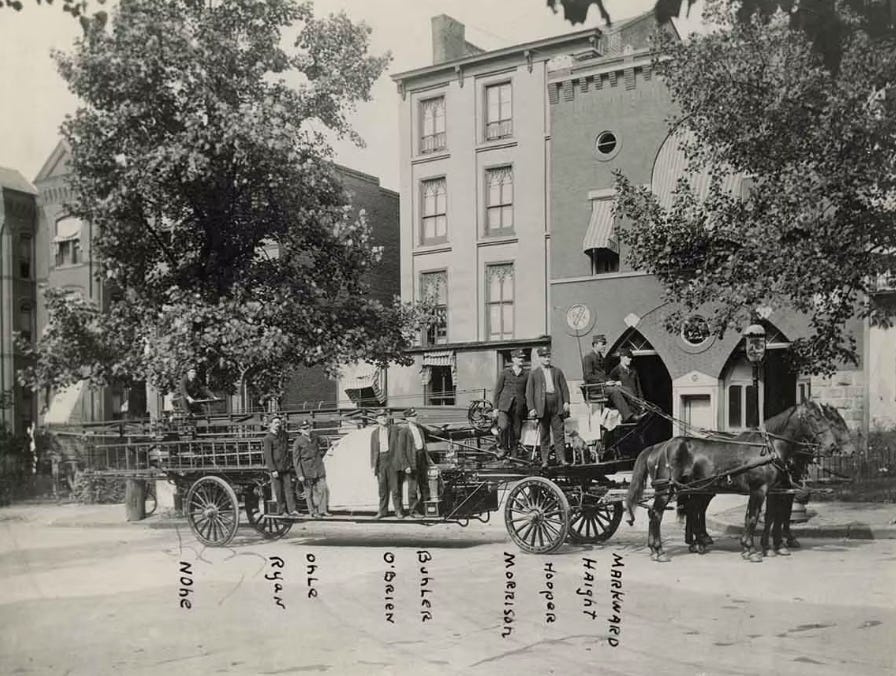
Residents claimed it would harm air and light quality, as well as be dangerous for fire safety, because fire engines wouldn’t be able to reach the top floor. Which is fine when your ladder trucks look like this:
But became quickly redundant with new innovations in safety codes, firefighting equipment, and more resistant materials like steel, as readers of last week’s Abundance roundup would know. However, these systems didn’t exist in 1899 when Congress passed the Height of Buildings Act (revised in 1910), which strictly imposed a 130-foot cap on buildings facing commercial streets and a 90-foot cap on those directed towards residential ones. This law has stayed on the books for the last century despite tremendous growth in Washington, which has gradually expanded to fill up almost the entire district. This diffuse pattern limits walking/transit speed and pushes taller developments further from the downtown core, which is especially inefficient for Washington thanks to its hub-and-spoke Metro design. Rather than giving the densest clusters of people easy access to all parts of the city, residents in highly populated areas like Ballston and Crystal City need to first travel to central transfer stations. This inflates average commute times and promotes car usage.
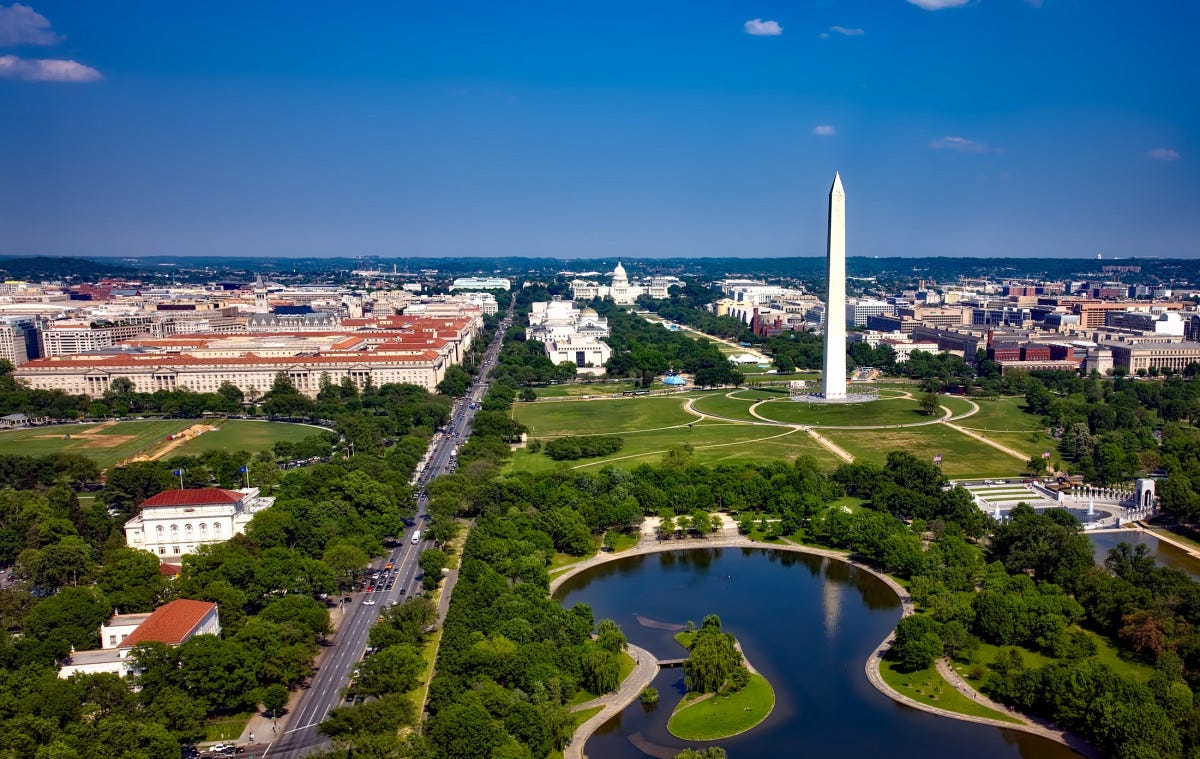
Even though preservation of the monumental skyline was not the original consideration, over the past century it has become a widely cited justification for maintaining the height restrictions. However, this is not an issue in Washington thanks to the city’s road layout, whose diagonal boulevards maintain sight lines of the major monuments for miles.
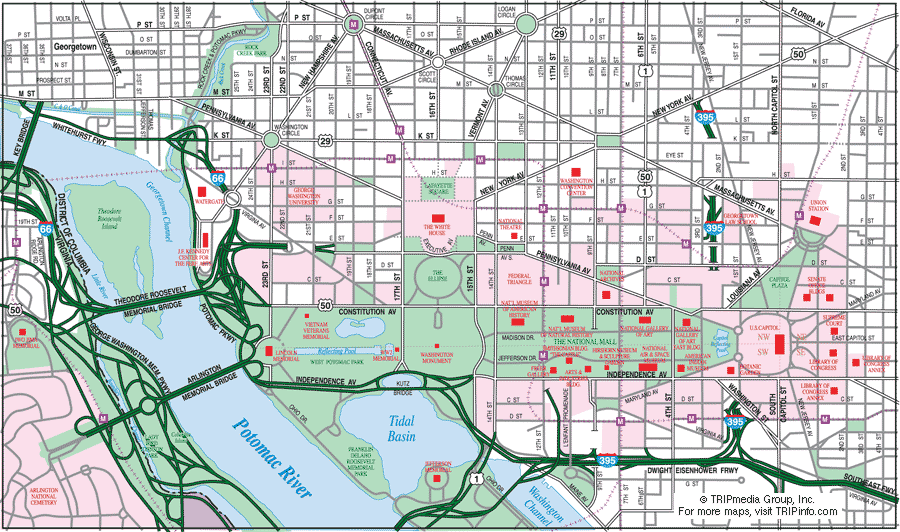
DC’s current height restrictions are actually even lower than 130 feet for most of the city, like on M Street in Georgetown, which has a 50-foot limit. Only a few areas downtown can build up to the full Congressional cap, and these zones have virtually maxed-out their heights already.
What would happen if DC removed its height restrictions? According to a Mortara Center undergraduate research paper by Georgetown student Kenan Dogan (MSB ‘23), DC would have about 19 skyscrapers based on the size of its economy:
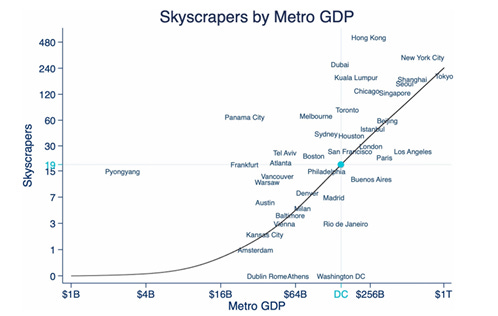
The actual number may be smaller, due to some skyscrapers already existing in Rosslyn and Crystal City, but this would be offset by the larger economy the extra space would permit. The DC Government estimates that just in tax revenue alone, removing height restrictions would generate $115 million annually.
However, the main benefit would not come solely from skyscraper-sized buildings, but moderately larger offices and apartments able to add more floors. For an estimate of this effect, Dogan compares DC to the similar planned city of Philadelphia. This chart compares their downtown floor-to-area ratios (FAR), the square footage of floor area divided by square footage of the building’s footprint:
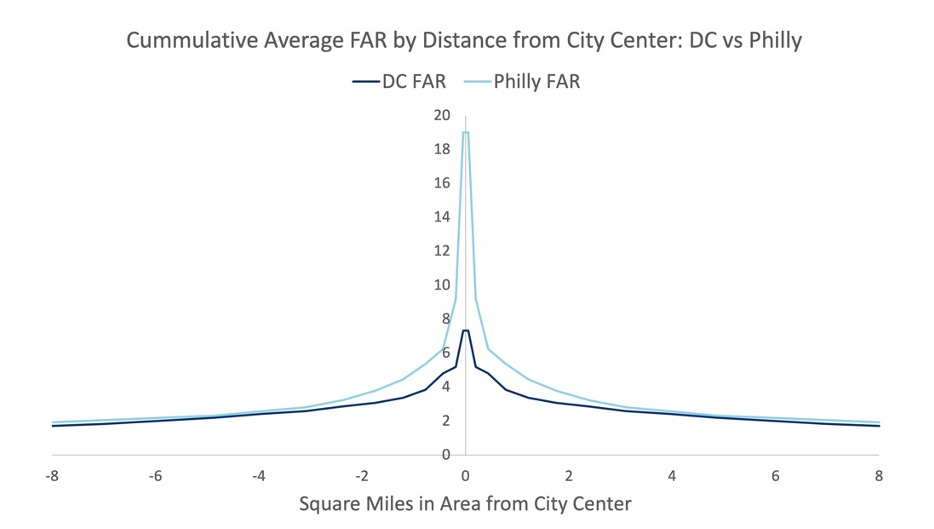
Central Philly tops out at 19 FAR, while DC only manages a measly 7.5. This implies that without the height act, DC’s downtown could 2.5x its building supply! Back-of-the-envelope calculations from a Federal Reserve study suggest that this could cut DC rents by at least 10.5%, as well as tremendously boosting the productivity of the downtown core, already well-situated for transit access.
While the Height Act is logistically a Home Rule question, because Congress would need to repeal it, urbanistically it comes down to the basic YIMBY-NIMBY question: should supply be constrained for purely aesthetic reasons? The answer we need is, “no, we must build what we need to thrive.”
Washington could become a poster child for the Abundance movement: it has the transit network, the economic heft, and the pressing need for growth. Should our nation’s capital not embody the country’s goals for the future?